

It starts earlier.
It starts when the company is clear enough that an investor can understand the opportunity, the risk, the momentum, and the ask without the founder having to over-explain everything live.
A deck matters.
But a deck is only one asset inside a fundraising system.
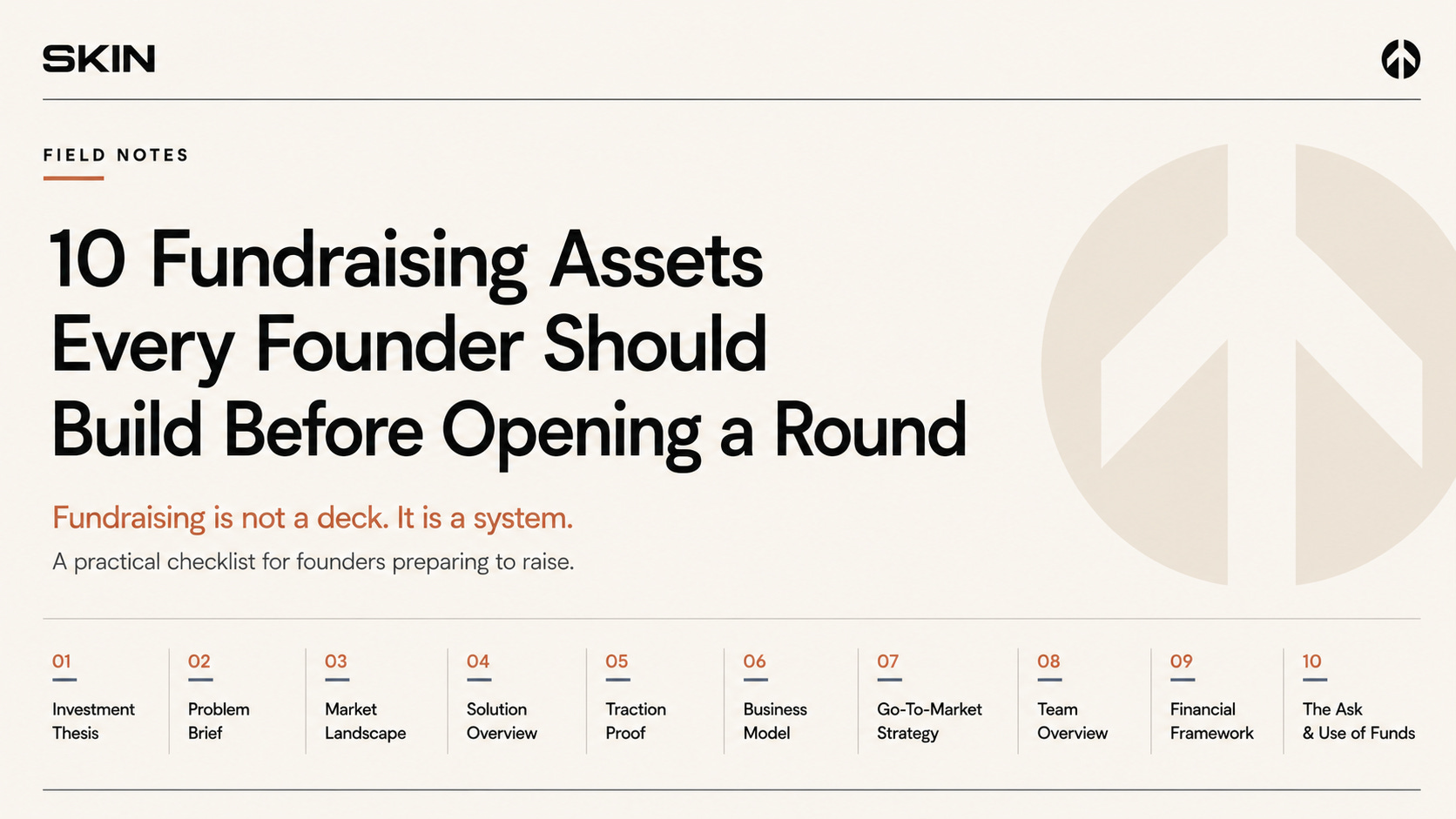
Before you open a round, build these 10 assets.
1. One-line company description
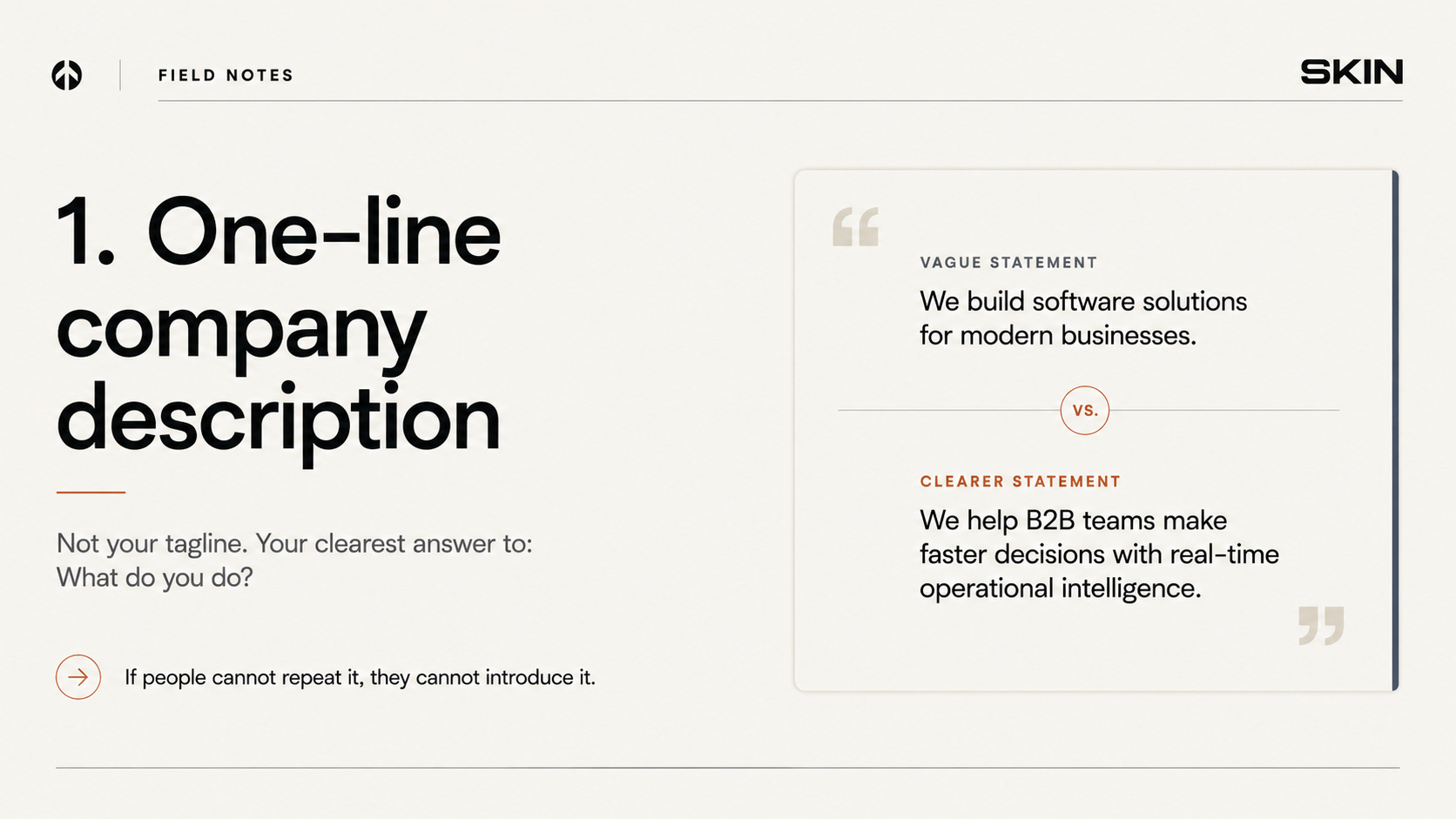
Not your tagline.
Your clearest answer to: “What do you do?”
A strong one-liner explains the customer, problem, product, and outcome.
If people cannot repeat what you do, they cannot introduce you.
2. Investor narrative
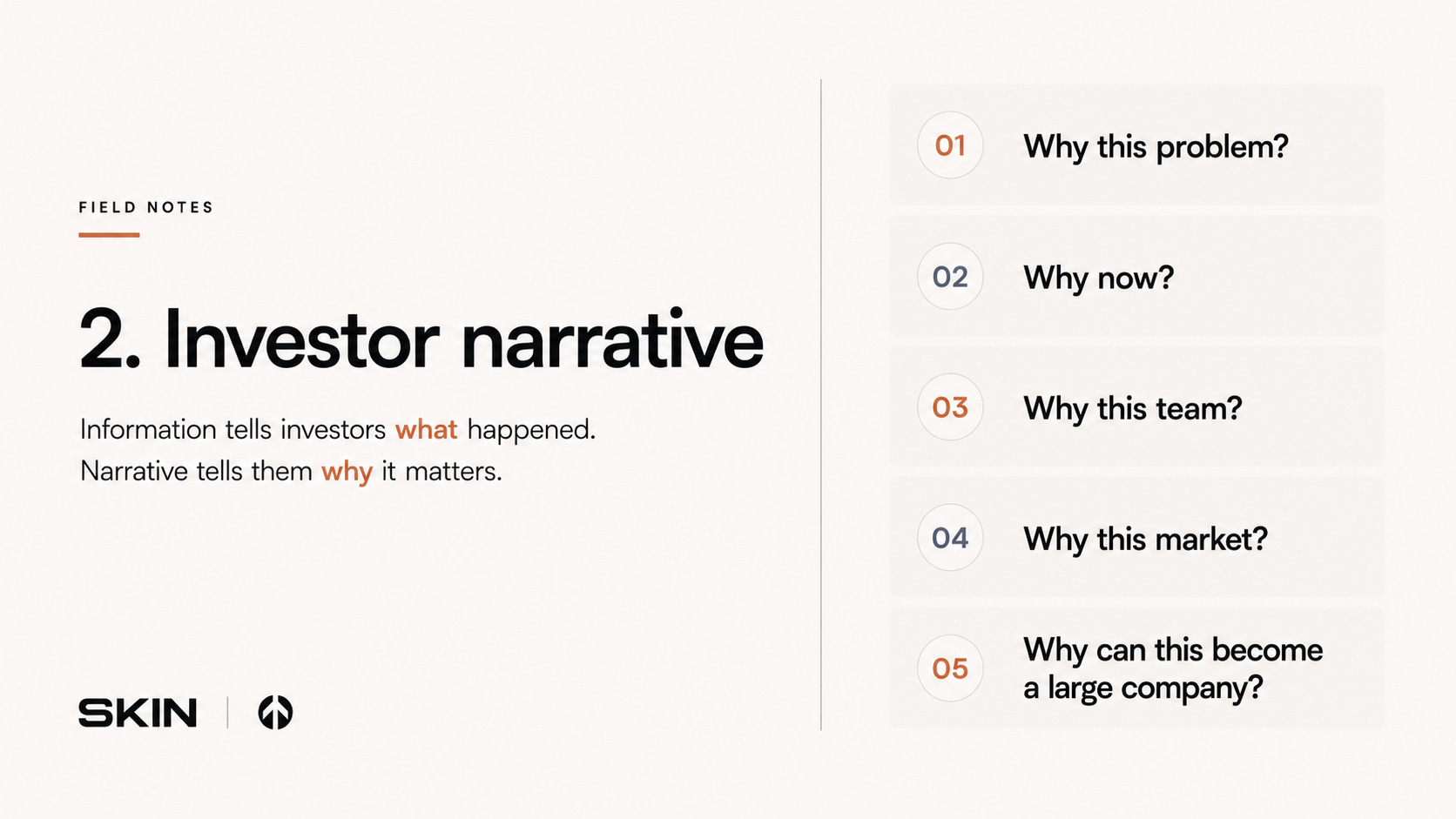
Your narrative should answer:
Why this problem?
Why now?
Why this team?
Why this market?
Why can this become a large company?
Information tells investors what happened.
Narrative tells them why it matters.
3. 10-slide deck
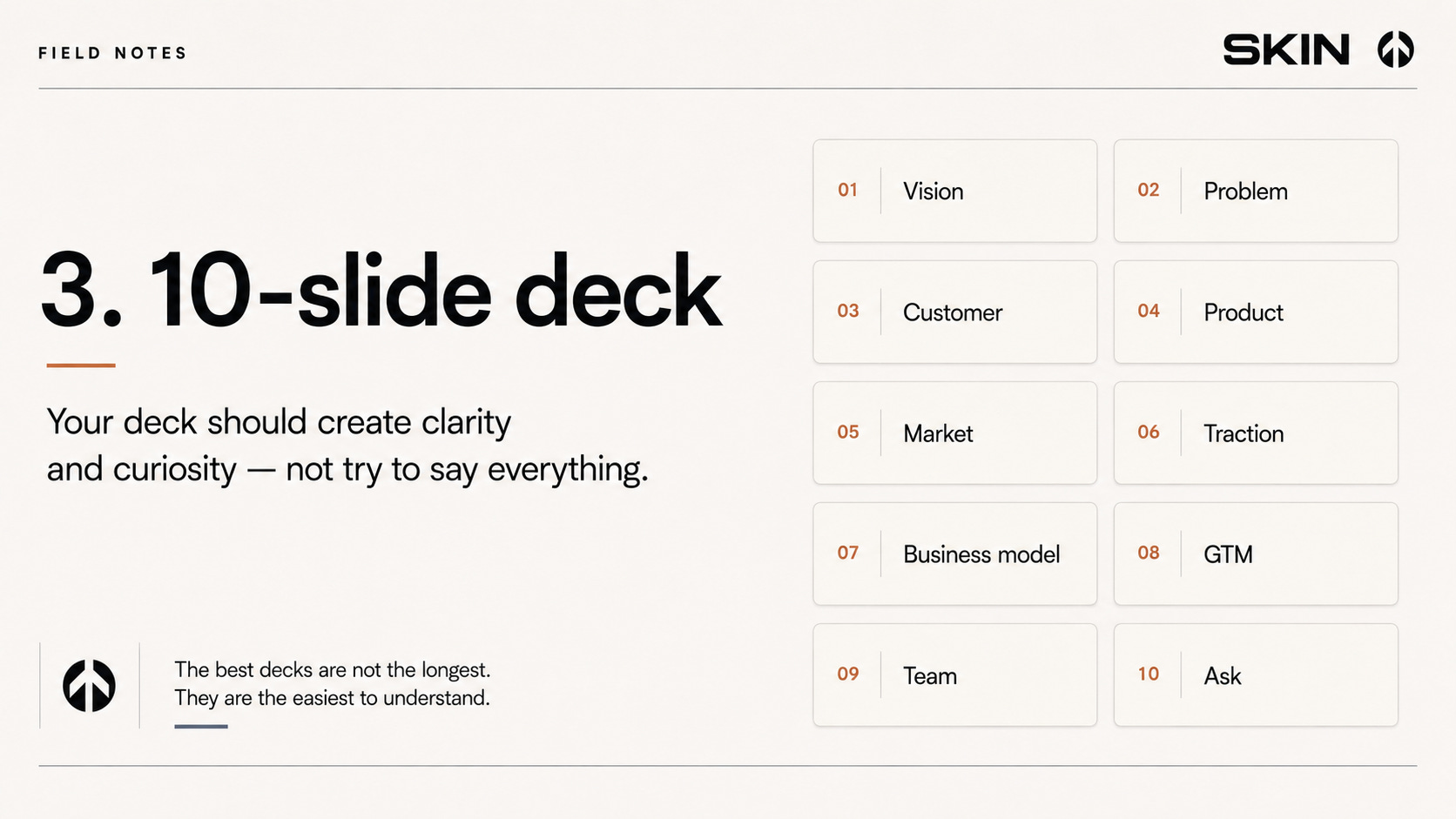
Your deck should not say everything.
It should create enough clarity and curiosity to earn the next conversation.
Core structure:
Vision
Problem
Customer
Product
Market
Traction
Business model
GTM
Team
Ask
The best decks are not the longest.
They are the easiest to understand.
4. Data room
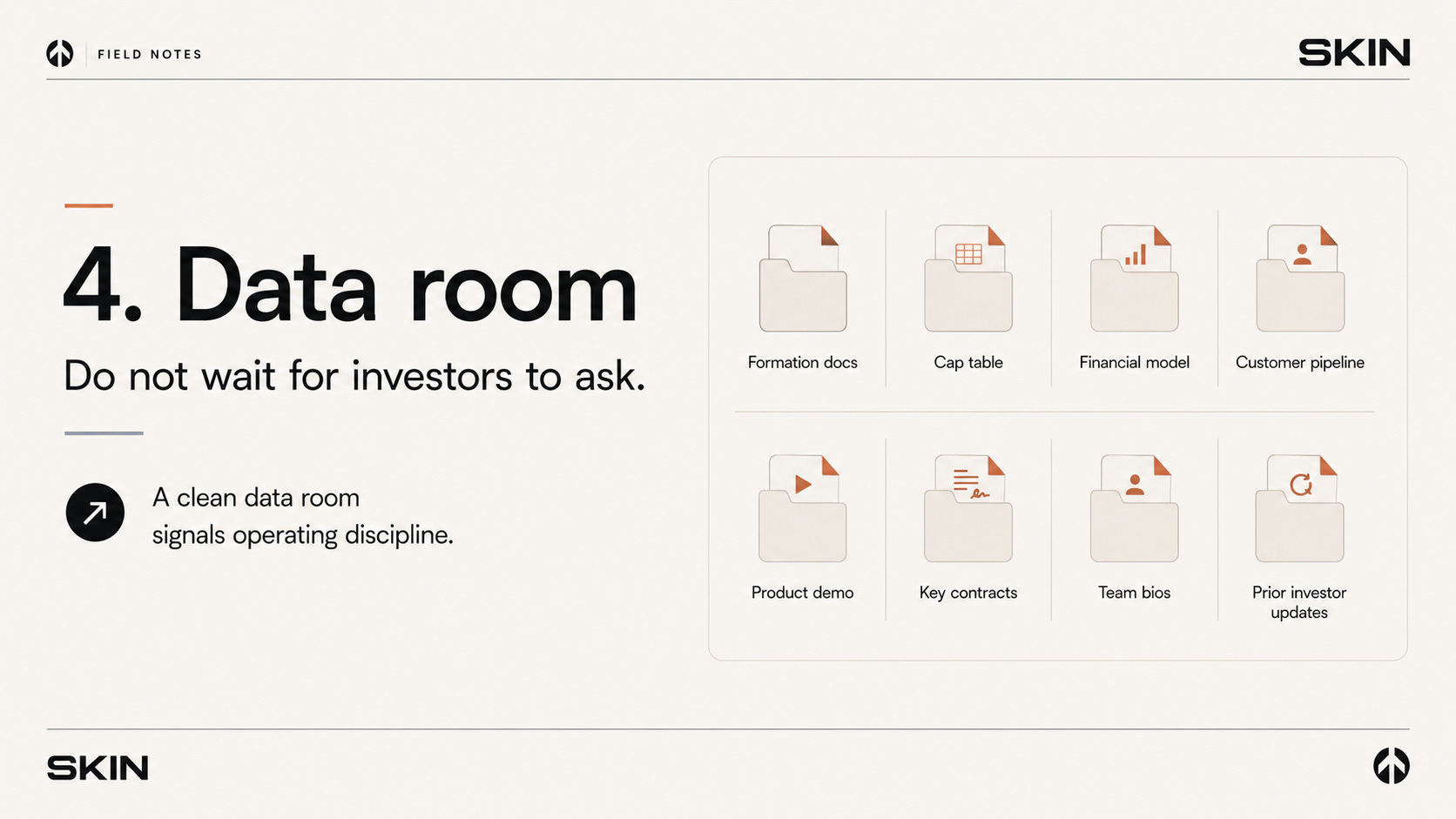
Do not wait for investors to ask.
Prepare the basics:
Formation docs
Cap table
Financial model
Customer pipeline
Product demo or screenshots
Key contracts
Team bios
Prior investor updates
A clean data room signals operating discipline.
5. Cap table and dilution view
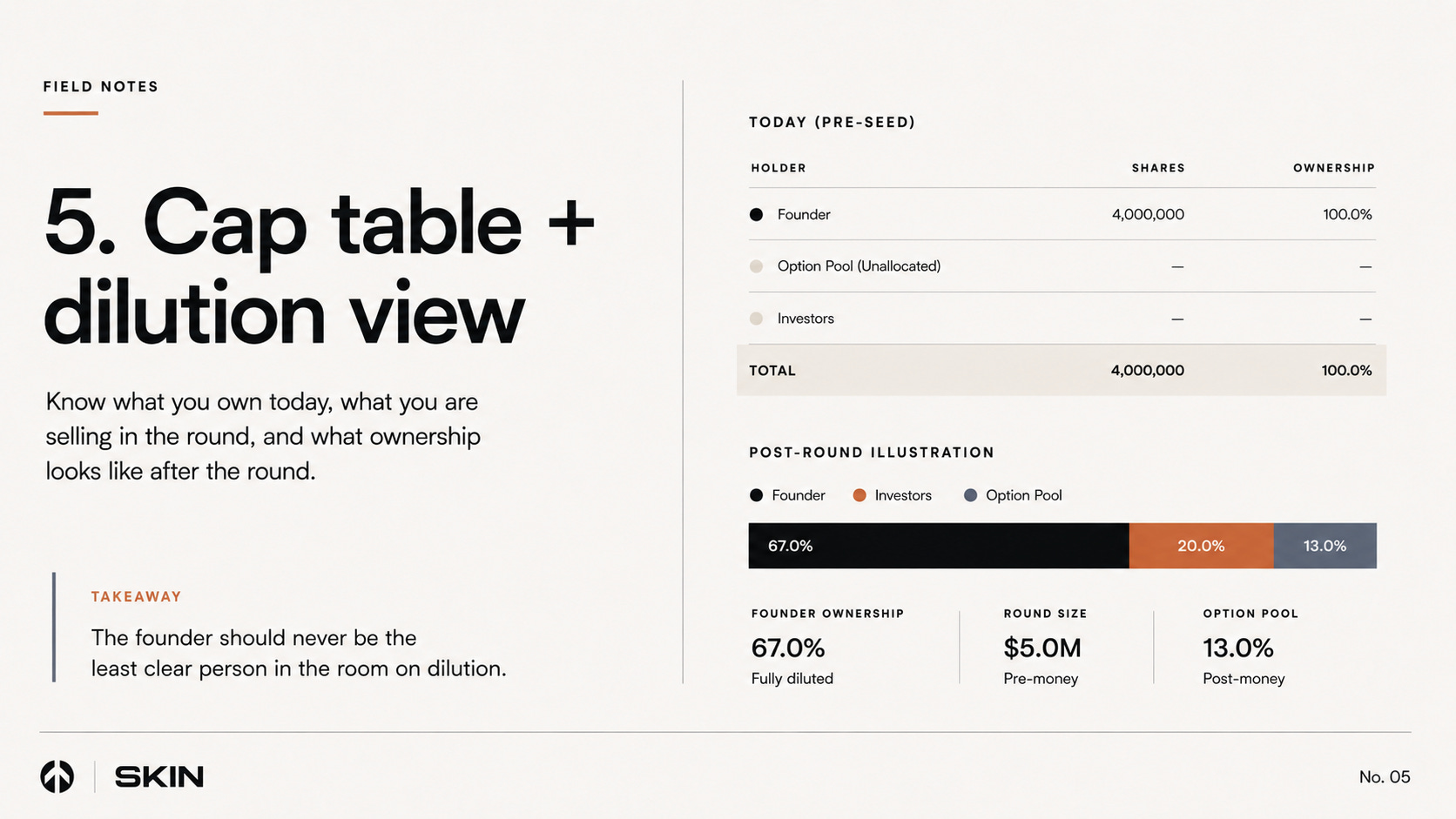
Every founder should know:
What they own today
What they are selling in the round
What ownership looks like after the round
The founder should never be the least clear person in the room on dilution.
6. Fundraising target list
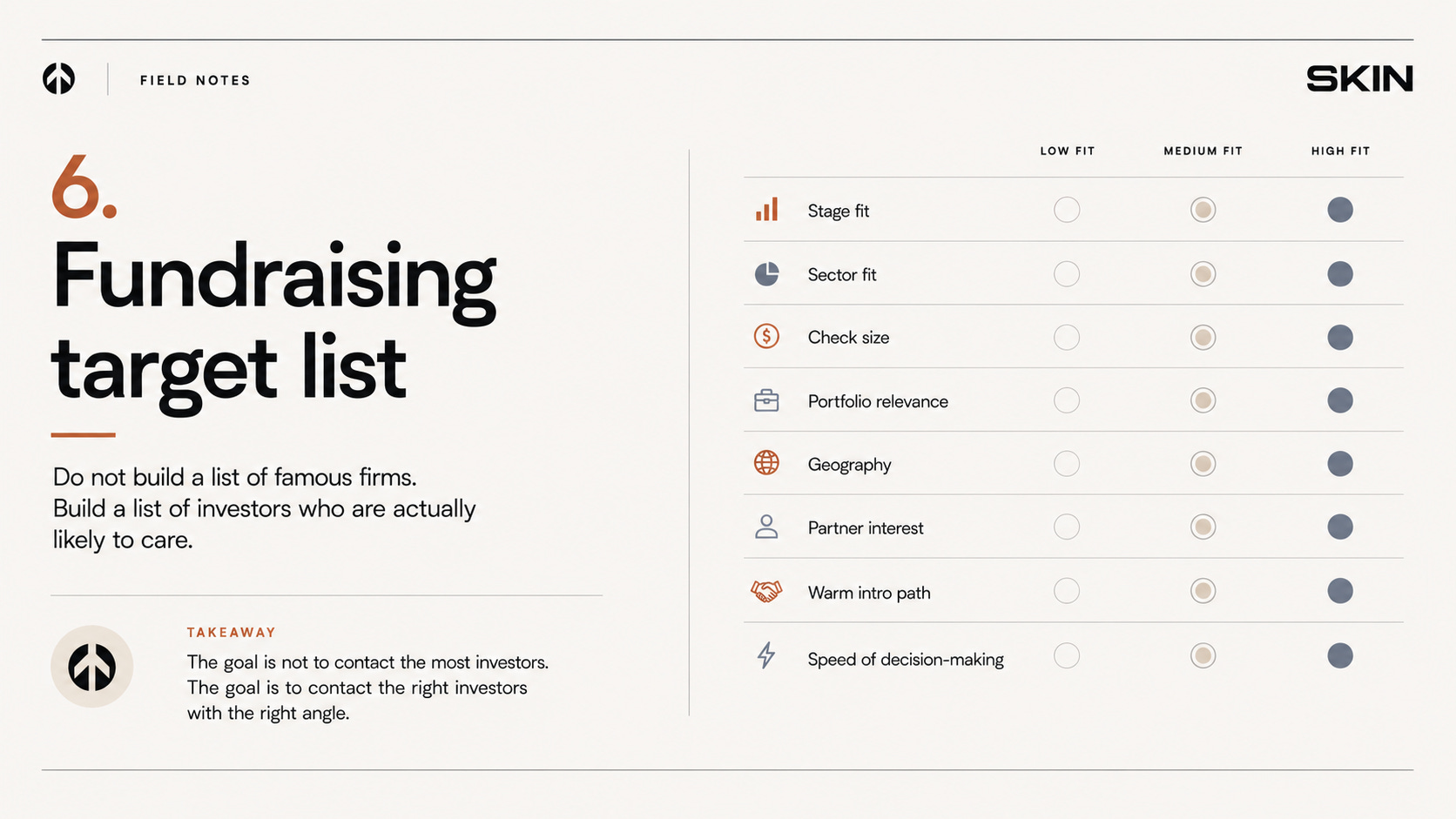
Do not build a list of famous firms.
Build a list of investors who are actually likely to care.
Score each investor by:
Stage fit
Sector fit
Check size
Portfolio relevance
Partner interest
Warm intro path
Speed of decision-making
The goal is not more investors.
The goal is the right investors with the right angle.
7. Warm intro map
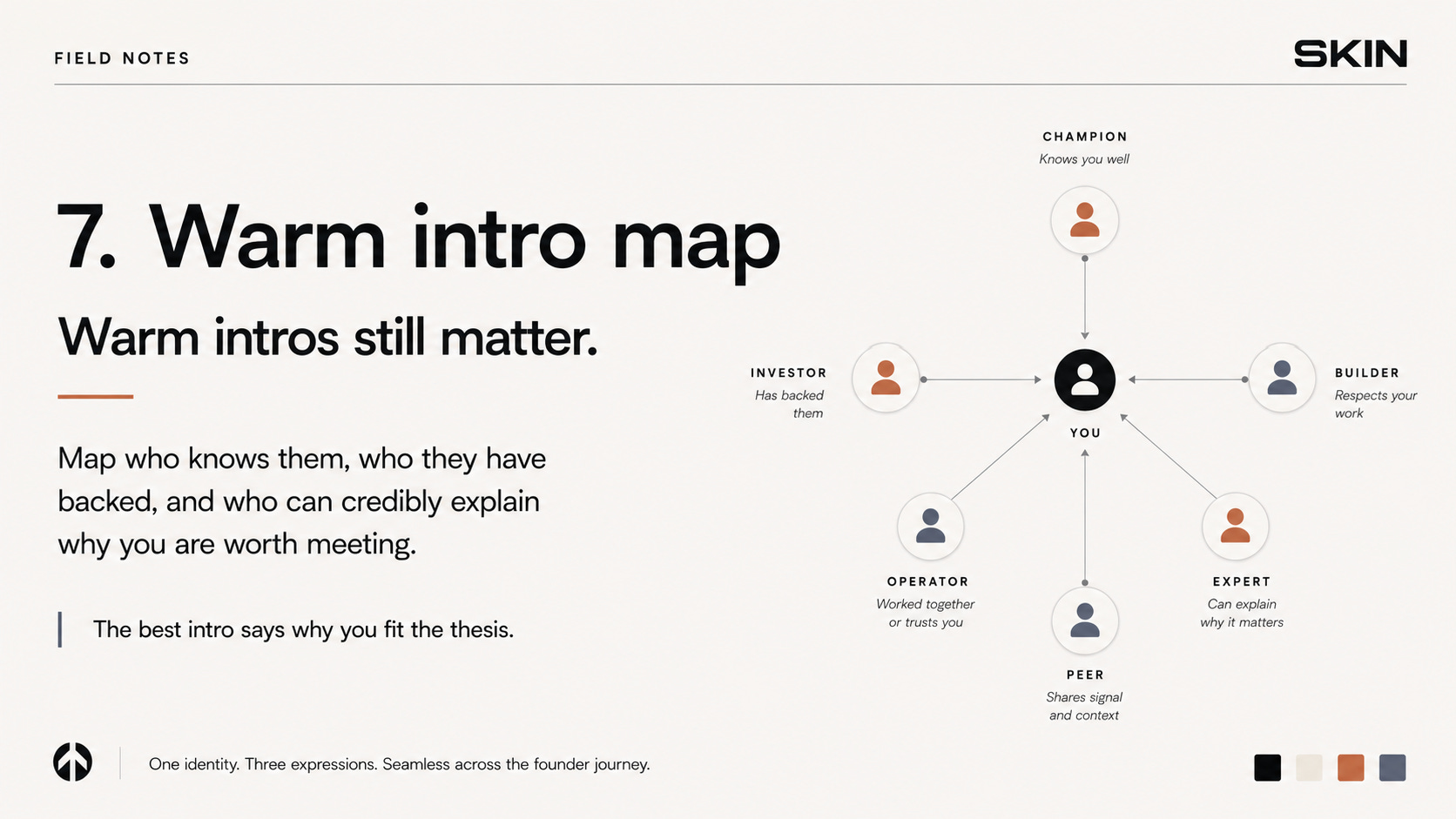
Warm intros still matter.
For every target investor, map:
Who knows them?
Who have they backed?
Who has co-invested with them?
Who can credibly explain why you are worth meeting?
The best intro does not just say, “meet this founder.”
It says, “this founder fits your thesis, and here is why.”
8. Traction evidence pack
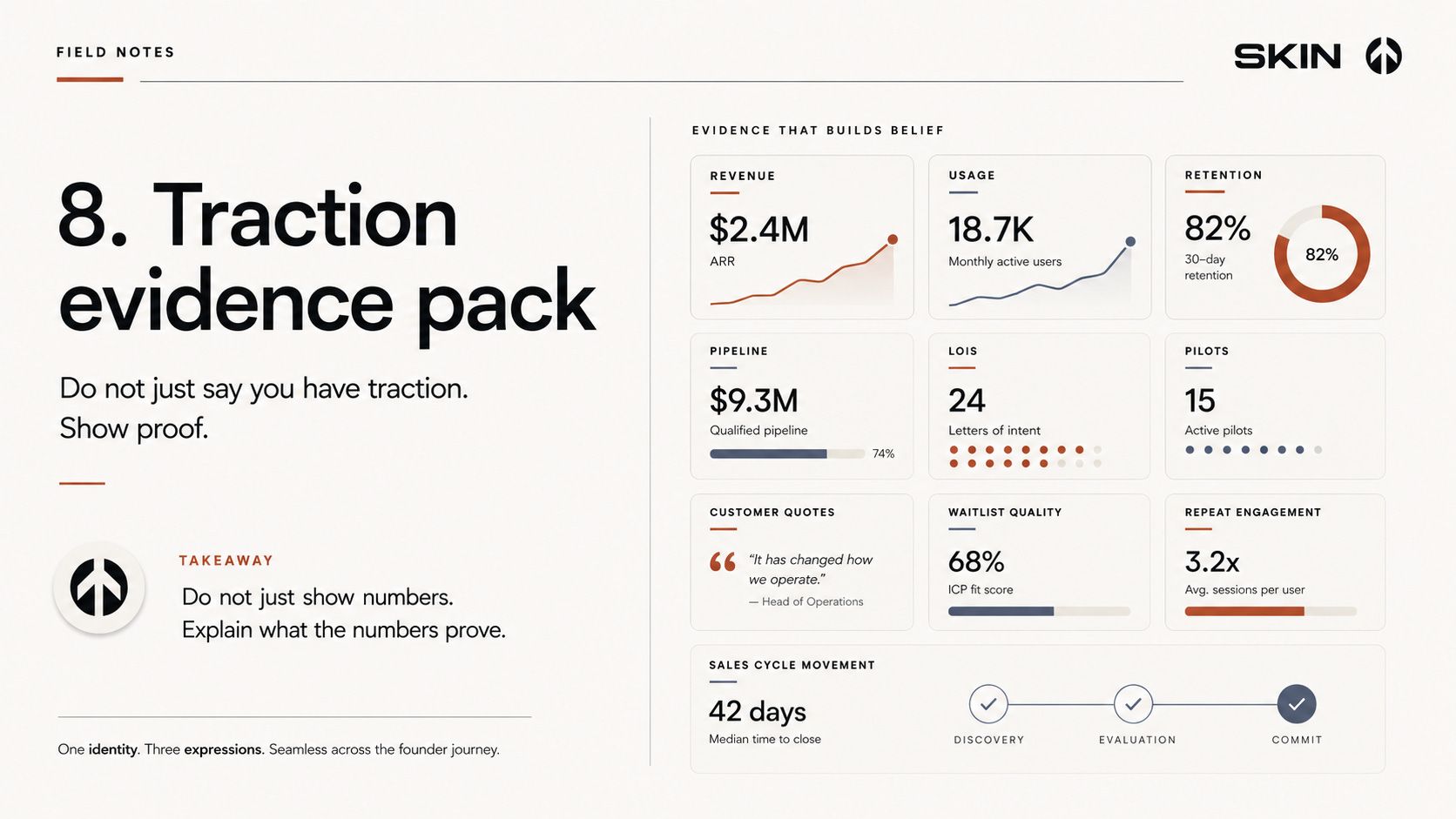
Do not just say you have traction.
Show proof.
Depending on the company, this might include:
Revenue
Usage
Retention
Pipeline
LOIs
Pilots
Customer quotes
Waitlist quality
Repeat engagement
Sales cycle movement
The point is not just to show numbers.
The point is to explain what the numbers prove.
9. Objection memo
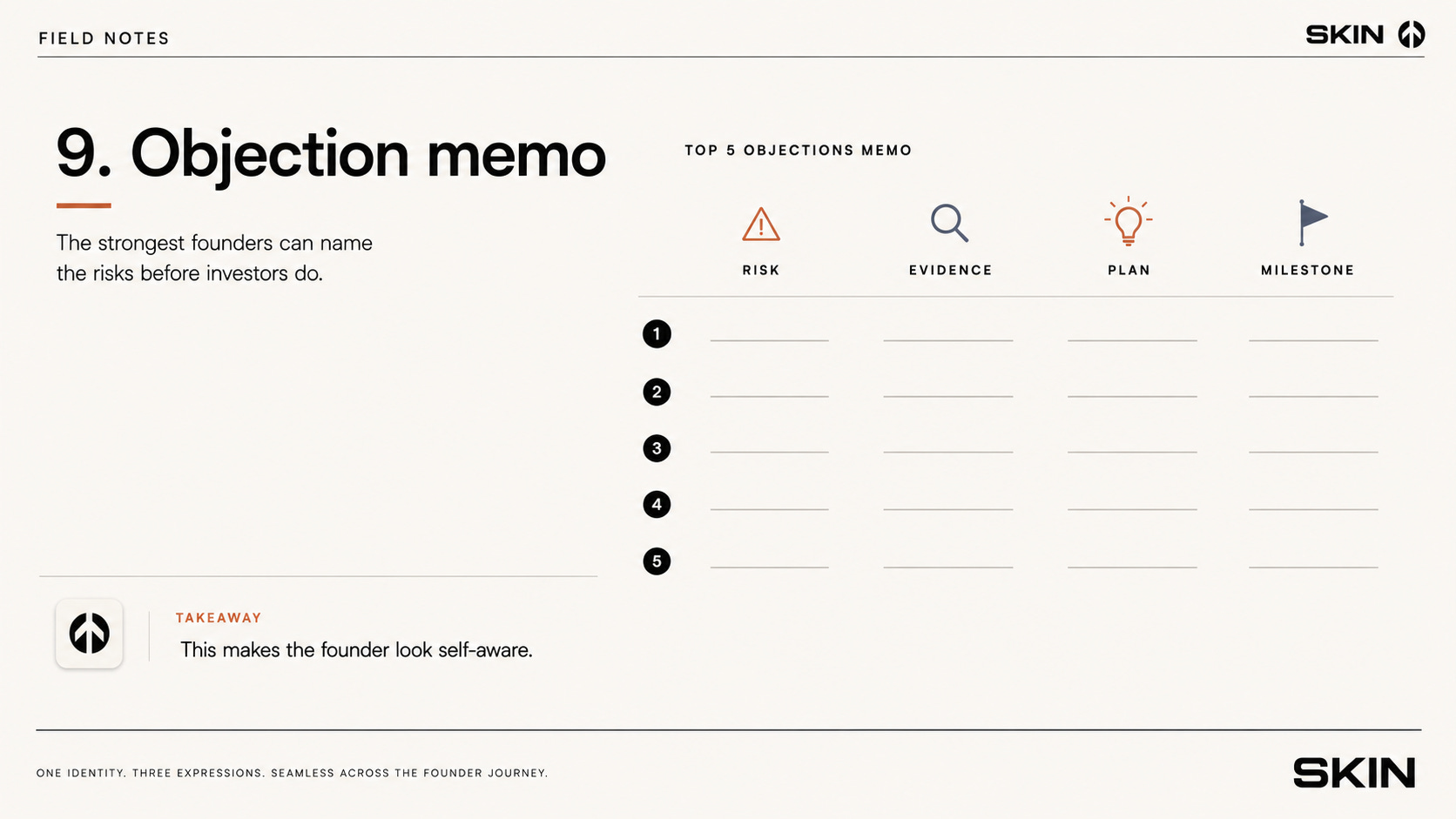
Every company has risks.
The strongest founders can name them before investors do.
Write down the top 5 objections an investor will likely raise.
For each one, answer:
What is the honest concern?
What do we know today?
What are we doing to reduce the risk?
What milestone would change the conversation?
This does not make the company look weak.
It makes the founder look self-aware.
10. Follow-up system
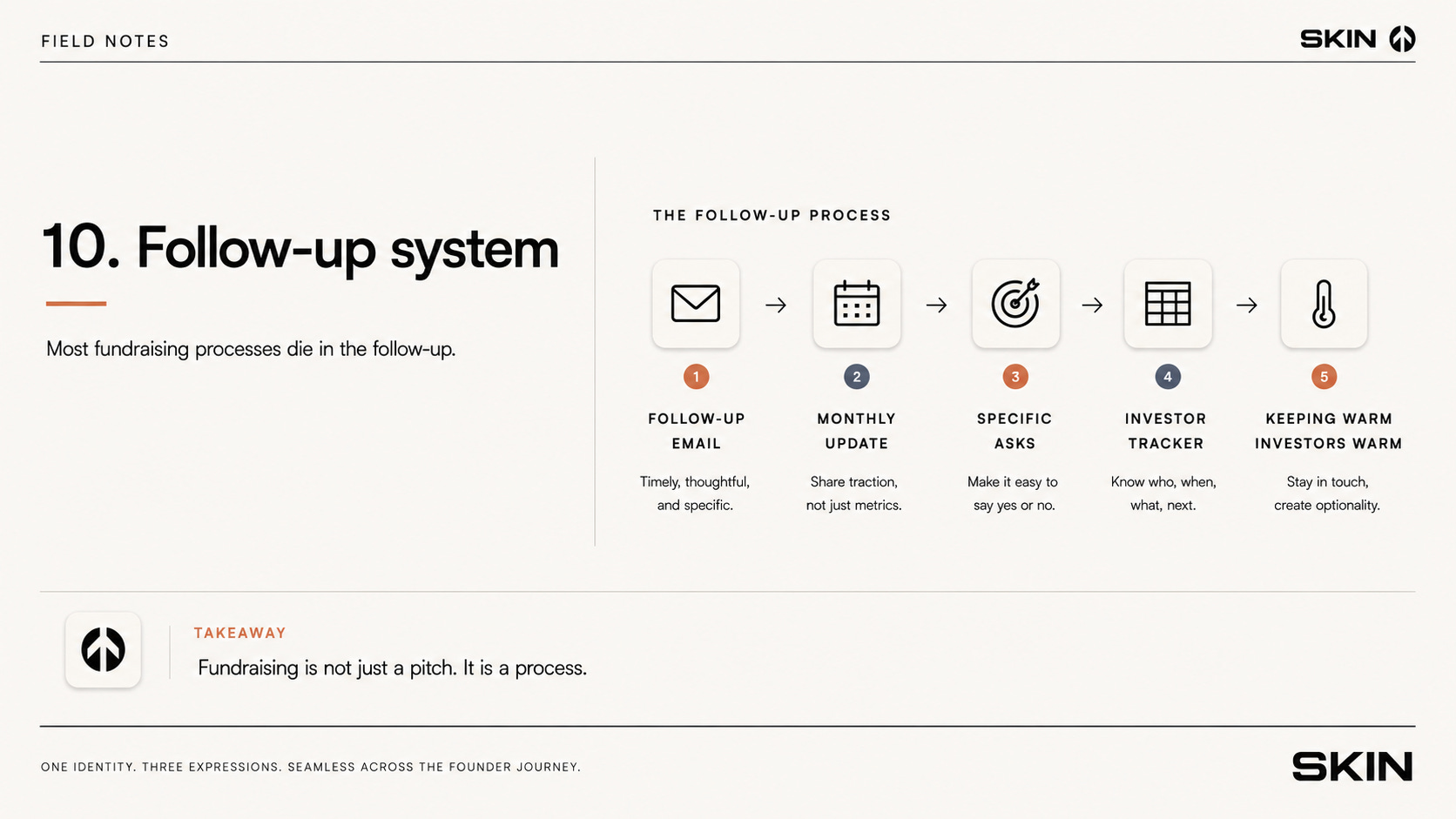
Most fundraising processes die in the follow-up.
Before your first investor meeting, prepare:
Follow-up email template
Monthly investor update
List of specific asks
Investor CRM or tracker
System for keeping warm investors warm
Fundraising is not just a pitch.
It is a process.
The SKIN take
Fundraising is not a charm offensive.
It is a clarity test.
Investors are looking for signal.
The founder’s job is to reduce confusion, show momentum, and make the next step obvious.
Before you raise, ask yourself:
Can someone understand the company in 60 seconds?
Can they explain why now?
Can they see the path to scale?
Can they identify the risk and believe we know how to reduce it?
Can they imagine introducing us to someone else?
That is what being fundable really means.
